Every product, worn
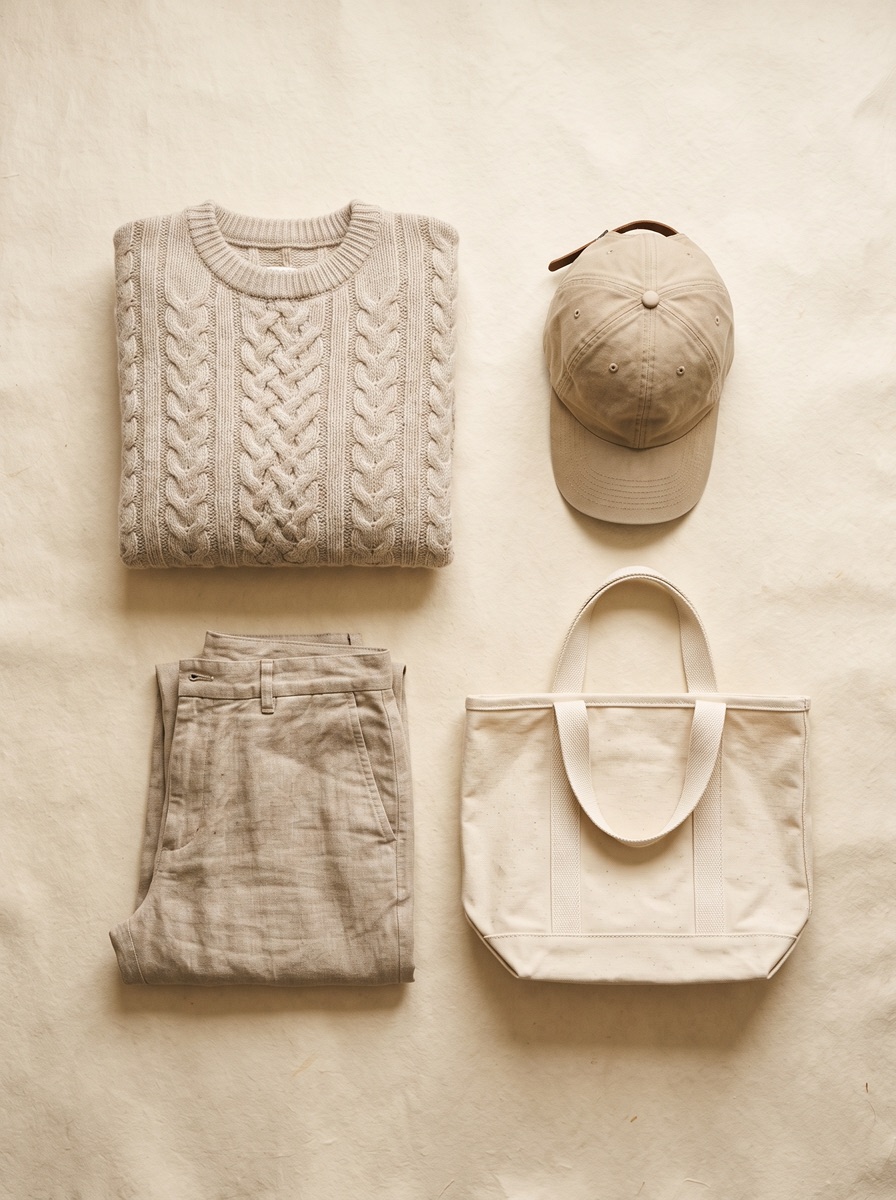
A flat-lay is the photo nobody stops scrolling for. Put the item on a model with a face that stays the same across your whole catalog, in the setting your product belongs in.
Import your Shopify catalog and give every product a virtual try-on. We handle the whole setup: your catalog comes across, your products go onto an AI model, and every product links straight back to the real item on your shop.
No app to install. No code, no Shopify permissions, no password. We read the catalog your storefront already publishes.

Four things, and none of them are work on your side.
yourbrand.myshopify.com, your own domain, one collection, or a single product link. Your catalog loads instantly — photo, title, price and product type for every item.
Your products go onto an AI model who is recognisably the same person in every shot, because each generation is anchored to a character sheet we build once.
Each item gets its own public page carrying a button through to the real product on your shop. You sell on your own checkout, and we never see the money.
You see the whole thing before anybody else does. Tell us what to change and we change it. Nothing is published until you are happy with it.
A catalog modelled by four different-looking strangers reads as stock photography. Every generation here is anchored to one character sheet, built once for your store, so the person wearing item forty is the person who wore item one.
How the face stays consistent
A second storefront, in front of an audience that is already here to look at people.
A flat-lay is the photo nobody stops scrolling for. Put the item on a model with a face that stays the same across your whole catalog, in the setting your product belongs in.
Every listing points at the real product page. Shoppers get a button through to it, and those clicks are counted separately from anything sold here, so you can see both funnels.
Each product gets a public, crawlable page with its own title, description and preview card, listed in the sitemap. A link posted anywhere unfurls properly.
Open the storefrontA character locked to your catalog and nothing else. Ask her for something you don't stock and she offers the nearest thing you do — she can't promise a product that isn't real.
See the selling side
We are just launching, and every setup here is done by a person rather than by a signup form. So we are taking a small number of partner stores to start with and staying close to them, which is why this page ends in a conversation rather than a checkout.
Shopify is the first platform we read directly, and more are coming. In the meantime every product tool here also takes a plain photo upload, so a catalog on any platform can still be brought in and modelled. Tell us what you are on and we will say where it stands.
No. Shopify storefronts publish their live catalog as an open feed, the same data your own theme reads to draw your product pages, so your store address is enough. Nothing is installed, nothing is authorised, and no key is asked for or stored.
For each product: its first photo, its title, its description, its tags, its product type and its price. The photo is copied onto our storage rather than hot-linked, so what goes live here never breaks when you edit the product on your shop.
No. Only the published catalog your storefront already serves to any visitor is readable, and nothing can be written back to your store. Orders, customers and unpublished drafts are not visible.
There is a one-time setup fee that covers the whole build, and a monthly subscription after that to keep the storefront live. Both figures are stated in full on the offer page, and the monthly only starts once you have approved the storefront and it is live.
Because we are just launching and every setup is done by a person rather than by a signup form. We are working closely with a small number of partner stores to start with, so it begins with a conversation and we will tell you honestly whether your store is a fit.
No, and that is the point of the link. Every product page carries a button through to the real product on your own shop, and those click-throughs are counted separately, so you can see what this sent you. You sell on your own checkout and we never see the money.
The most common reason is that the store is password-protected or still in development, which makes the catalog unreadable to everyone until it is published. A store on a platform other than Shopify will not load either, and for those we would need to talk about photos directly.
We re-read your store, and only what is new comes across. Keeping that up to date is part of what the monthly subscription covers.
You have the products and the photos. Send us the address and we will tell you what the whole thing would look like on your store.